
Wonolo
Wonolo incBusiness
4.36.13K Reviews
- Version
- 5.56.0
- Installs
- 1.00M
- Age Rating
- Everyone
Screenshots
Our Review of Wonolo
 Analysis by Appyee
Finding dependable short-term work can be frustrating when the usual route involves searching several job boards, sending applications, and waiting for replies that may never arrive. Wonolo takes a more immediate approach: it is a free business app from Wonolo inc that connects people with local work opportunities through a mobile-first experience. I see it as most useful for someone who wants flexibility and is prepared to check regularly, rather than someone looking for a single permanent job search tool.
After spending time with the app, my impression is practical rather than glamorous. Its appeal is the possibility of turning available time into a work opportunity without committing to a conventional schedule. That convenience comes with trade-offs, though. The quality and usefulness of the experience depend heavily on what appears in your area, how quickly you respond, and whether the available work fits your skills, transport options, and schedule.
How Wonolo feels in its current form
Wonolo belongs in the business category, but I would not use it like a traditional office productivity app. Its real purpose is local flexible work. The central experience is built around discovering opportunities, considering whether they suit you, and managing your participation from a phone. That makes it especially relevant to people who want occasional shifts, extra income, or a way to work around another responsibility.
The app has been available since September 2014, and its current version is 5.56.0. That combination suggests a product that has had time to mature while continuing to receive changes. In practical terms, the current release feels like part of an established service rather than an experimental concept. I would still judge it by the opportunities available near me, because a polished interface cannot compensate for a thin local selection.
Its public reception is encouraging: Wonolo holds a 4.3 average from around nineteen thousand ratings, with roughly six thousand reviews, and it has passed one million installs. Those figures tell me that the app has attracted a substantial audience and that many people find the idea useful. They do not guarantee that every user will see the same results. Local availability, timing, and the type of work being offered matter more here than broad popularity.
The app is free, which removes an obvious barrier to trying it. I like that approach for a work-discovery service because users can explore the experience before deciding whether it fits their routine. Still, “free” should not be confused with effortless. You may spend time reviewing opportunities, checking requirements, planning travel, and deciding whether a shift is worthwhile. The cost is often measured in attention and flexibility rather than an upfront purchase.
The best fit is someone who can act quickly
Wonolo makes the most sense for people who can adapt their schedule. A student with open days, a person between jobs, or someone building a second source of income may appreciate having another place to look for local work. It can also suit someone who does not want to make a long commitment before testing a type of role.
I would be more cautious if you need guaranteed hours, a predictable weekly rota, or a clearly defined long-term career path. In those cases, applying directly to employers or using a conventional recruitment platform may be better. Those alternatives can take longer, but they are usually designed around stable employment rather than immediate flexibility.
The Everyone age rating makes the app broadly approachable from a content perspective. That does not mean every opportunity will be suitable for every person. You still need to consider the practical requirements of a role, including its location, timing, physical demands, and any qualifications or experience it expects.
A realistic day-to-day example
Imagine I have a free weekday, need additional income, and live close enough to several commercial areas to travel without difficulty. I would open Wonolo early, review the available work, and compare the start time with the journey rather than accepting the first attractive-looking option. A shift that appears worthwhile can become a poor choice if transport takes too long or if the timing clashes with childcare, classes, or another job.
My useful habit would be to treat each opportunity as a small planning exercise. I would check the location first, then the schedule, then the nature of the work and any stated expectations. Only after that would I consider whether the opportunity fits my day. This prevents a common mistake with flexible-work apps: focusing on the headline opportunity while ignoring the real time and effort required to complete it.
That workflow is one of Wonolo’s strengths. It encourages a more active relationship with work discovery than simply uploading a résumé and waiting. The weakness is that the responsibility shifts toward the user. If you do not check often or evaluate details carefully, the app will not automatically create a reliable schedule for you.
What the recent version means for established users
For existing users, version 5.56.0 is best understood as the current reference point for the app rather than proof of a particular feature overhaul. The product has evolved through multiple releases, but I would avoid assuming that every update changes the way people find work. In a service like this, improvements can be subtle: smoother navigation, clearer information, fewer interruptions, or better handling of routine actions.
That matters because small usability improvements can have a real effect when users are checking opportunities repeatedly. If the app is part of your daily routine, even modest friction in browsing, reviewing, or managing a work commitment becomes noticeable. A current version also gives new users a fairer starting point than an outdated installation, so I would keep the app updated before judging it.
At the same time, I would separate confirmed current behavior from expectations about future development. The version number tells me where the app stands now, not what Wonolo inc will add next. I would watch future releases for changes that make opportunity details easier to compare, reduce uncertainty around commitments, or help users plan several workdays without turning the interface into a complicated job-management system.
Where it beats the usual alternatives
Compared with browsing general job boards, Wonolo feels more focused on immediate local possibilities. Traditional boards are often better for permanent roles, detailed career histories, and employer-led recruitment. Wonolo is more appealing when my main question is, “What work might fit my availability soon?” That difference makes it complementary to a standard job search rather than a complete replacement.
Compared with asking friends, visiting local businesses, or checking community postings, the app offers a more organized starting point. I can search from the phone instead of relying entirely on personal contacts. The trade-off is that personal recommendations may provide context that an app listing cannot, especially about the workplace, management style, or the realistic pace of a task.
Compared with committing to a fixed part-time role, Wonolo offers more freedom but less certainty. That is the key exchange. I would choose it when flexibility is more valuable than a guaranteed pattern. I would choose a direct employer application when predictable income and continuity matter more than being able to decide shift by shift.
Three practical habits that improve the experience
First, judge the whole commitment, not just the work period. Add travel, preparation, and recovery time to your calculation. A nearby opportunity may be more valuable than a slightly more appealing one that consumes much of the day in transit. This is especially important for people using public transport or balancing several responsibilities.
Second, build a repeatable checking routine. Rather than opening the app randomly, I would check at times when I can actually assess an opportunity calmly. The point is not to stare at the screen constantly; it is to create a habit that matches my availability. A disciplined routine reduces rushed decisions and makes it easier to notice patterns in the kinds of work appearing locally.
Third, keep a personal record of what suits you. After completing or considering an opportunity, I would note the location, timing, travel burden, and whether the work matched my expectations. Wonolo may help surface opportunities, but a simple personal record helps me refine my own choices. Over time, that can be more useful than accepting whatever appears first.
A fourth insight is to separate flexibility from convenience. Flexible work is not always convenient work. An opportunity can be flexible because I choose whether to take it, while still requiring early travel, physical effort, or careful planning. Recognizing that distinction helps prevent disappointment and makes the app more useful for realistic scheduling.
Where the experience still has gaps
The biggest limitation is local variability. An app can be excellent in one area and much less useful in another simply because the available opportunities differ. If I open it and find little that matches my schedule or abilities, the app cannot solve that problem through interface design alone. I would treat the first several checks as a test of local usefulness rather than assuming the service will immediately become part of my routine.
There is also a mental load involved in flexible work. You must make decisions, monitor timing, and protect yourself from accepting commitments that do not fit. Someone who prefers an employer to provide a stable schedule may find this tiring. In that situation, a conventional part-time position could be the better option even if Wonolo offers more choice.
I also would not rely on it as my only employment plan if my finances require consistent income. The app can be a useful channel for finding work, but flexibility naturally makes planning harder. Combining it with direct applications, a regular job, or another dependable income source may be safer for people with fixed monthly obligations.
Another point is personal suitability. A local opportunity may be available but still wrong for you because of travel, timing, experience, or the nature of the task. The app should support your judgment, not replace it. I would never accept something solely because it is visible and available; I would first ask whether I can realistically complete it to a good standard.
Questions I would consider before installing
If you are wondering whether Wonolo is worth trying, my answer depends on your goal. For occasional local work and schedule flexibility, yes, it is worth exploring because the app is free and has an established user base. For a guaranteed number of hours or a long-term professional path, I would look beyond it and use more traditional employment channels as well.
If you are concerned about whether it can replace a normal job, I would say no—not reliably for everyone. Its value is strongest as a flexible work option or supplement. Your local selection and availability will determine whether it becomes a meaningful source of opportunities or merely an occasional place to check.
If you are unsure how much time to invest, start with a short trial period rather than reorganizing your entire schedule around it. Check the opportunities that appear, calculate the real travel and time commitment, and see whether the available work matches your expectations. That approach gives you useful evidence without making an early commitment.
If you already use another job app, I would not necessarily replace it. Wonolo serves a different purpose from platforms centered on résumés, permanent vacancies, or professional networking. Keeping both can make sense: use Wonolo for flexible local possibilities and the other service for roles where stability, progression, or a formal hiring process matters more.
What I would watch in future updates
As the app continues beyond version 5.56.0, I would pay attention to how clearly it helps users compare opportunities before committing. Better decision-making support would be more valuable to me than decorative changes. I would want the experience to make location, timing, expectations, and practical fit easy to evaluate at a glance while preserving the quick access that makes the service appealing.
I would also watch whether the product becomes more helpful for repeat users without becoming burdensome for newcomers. Someone who checks occasionally needs a simple interface, while someone who relies on the app regularly benefits from tools that make planning and reviewing choices easier. The strongest evolution would serve both groups without turning flexible work into another complicated administrative task.
Finally, I would look for improvements that reduce uncertainty. Flexible work is attractive partly because it gives users control, but control is useful only when the information is clear enough to support a confident decision. Any future change that helps me understand an opportunity before I accept it would directly improve the app’s everyday value.
My overall view is positive but measured. Wonolo is a practical option for people who value local flexibility and are willing to manage their own choices. It is free, widely used, and mature enough to deserve a fair trial. I would recommend it to a friend who wants another route to occasional work, especially if that friend can respond quickly and plan around changing availability.
I would not recommend depending on it blindly. The right opportunity may not appear when you need it, and the freedom to choose also means taking responsibility for checking details and protecting your schedule. Used alongside more stable employment options, it can be genuinely useful. Used as a guaranteed replacement for a regular job, it may leave you wanting more certainty.
Verdict
Strengths of Wonolo
- Flexible shifts let you choose work that fits your schedule.
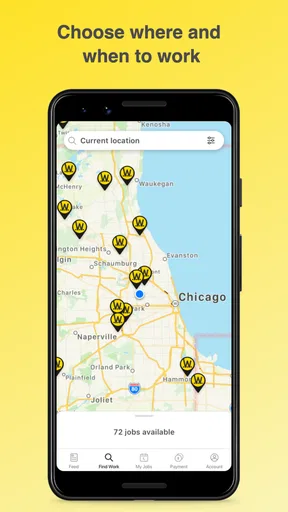
- Useful for finding short-term jobs in your local area.
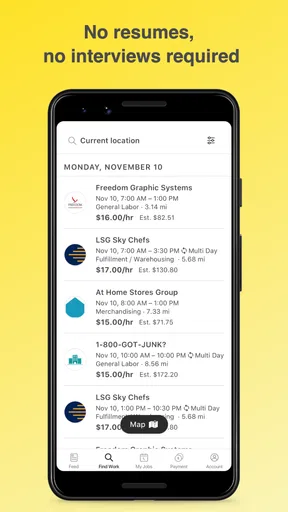
- Job listings usually show pay, location, and shift details upfront.
- In-app applications make it easy to respond quickly to open shifts.
- Can help build experience across different industries and roles.
Limitations of Wonolo
- Job availability varies greatly depending on your city and skills.
- Popular shifts may fill quickly, requiring frequent app checks.
- Some jobs involve demanding physical work or strict attendance rules.
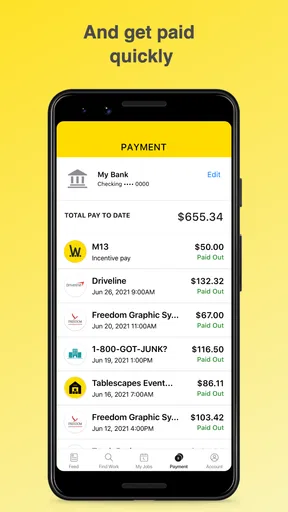
- Earnings may not be available immediately after completing a shift.
- Ratings and cancellations can affect access to future opportunities.
Similar Picks in This Category
View All
LinkedIn: Community & Network
LinkedIn3.8

Zoom Workplace
zoom.com4.1

Microsoft Teams
Microsoft Corporation4.6

Meta Business Suite
Meta Platforms, Inc.4.6

Webex Meetings
Cisco Systems, Inc.4.5

TeamViewer Remote Control
TeamViewer4.4
Frequently Asked Questions
What is Wonolo, and how does the app work?
Wonolo is a job marketplace app that connects workers with businesses offering short-term, flexible shifts. After creating a profile, you can browse available opportunities, review details such as pay, location, schedule, and requirements, then apply for suitable jobs. If selected, you complete the shift and receive payment according to Wonolo’s policies and the employer’s confirmed information.
What types of jobs can I find on Wonolo?
Wonolo commonly lists flexible work in areas such as warehouse operations, merchandising, event staffing, delivery support, customer service, administrative tasks, and general labor. Available positions depend heavily on your city, local business demand, qualifications, and schedule. Before applying, carefully read the job description because duties, physical requirements, transportation needs, and dress codes can vary considerably.
How much can I earn with Wonolo, and when will I get paid?
Pay varies by assignment, location, duration, experience requirements, and the company offering the shift. The app normally displays the expected compensation before you apply, allowing you to compare opportunities. Payment timing can depend on completing the work, employer confirmation, and Wonolo’s current payment procedures. Always check the specific listing and account information for the most accurate details.
What do I need to sign up and apply for jobs on Wonolo?
You generally need to create an account, provide personal and contact information, verify your identity, and complete any required profile or eligibility steps. Some assignments may require background checks, safety training, certifications, reliable transportation, or proof that you can legally work. Requirements differ by role and region, so completing your profile accurately can improve the number of opportunities you can view.
Is Wonolo safe and worth downloading for flexible work?
Wonolo can be useful for people seeking temporary shifts, supplemental income, or more control over their schedules, but it is not the same as guaranteed employment. Job availability may fluctuate, and some assignments can be physically demanding or require travel. Use the in-app communication and payment process, review employer and shift details carefully, and never accept work that appears suspicious or asks for inappropriate upfront fees.
